
Beyond Accessibility: The constant effort for Michigan to improve school meal quality
By Mia Litzenberg, Jacob Maurer, Gavin Hutchings and Kaitlyn Delaney | Spartan Newsroom
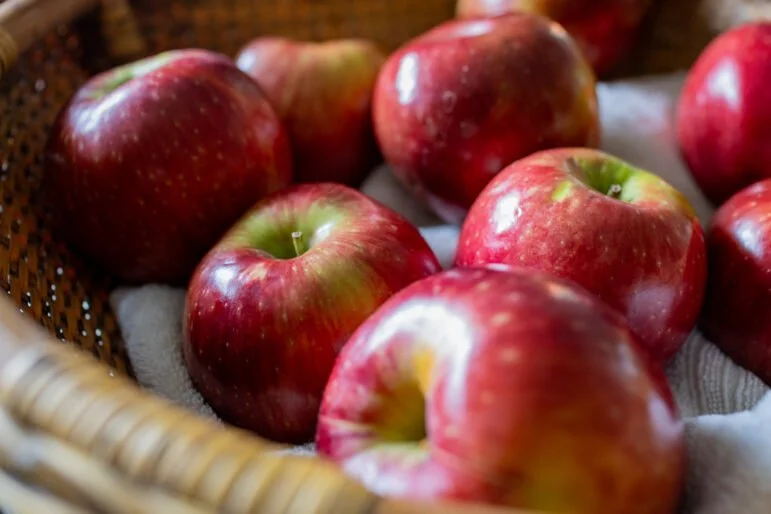
Caption: A basket of apples in East Lansing, Mich., on May 1, 2025. To help meet the required fruit and vegetable servings per meal, apples are offered as one of many choices for students to choose from. Photo by Gavin Hutchings
Despite improved access to free school meals, schools in Michigan are grappling with a fundamental challenge: not only providing meals but nutritious ones.
Michigan is among the first states working to address childhood hunger. Following the expiration of federal COVID-19 relief funds that provided free school meals, Michigan was one of eight states to pass legislation in 2023 offering universal school meals after observing the positive impact on student health and academic engagement.
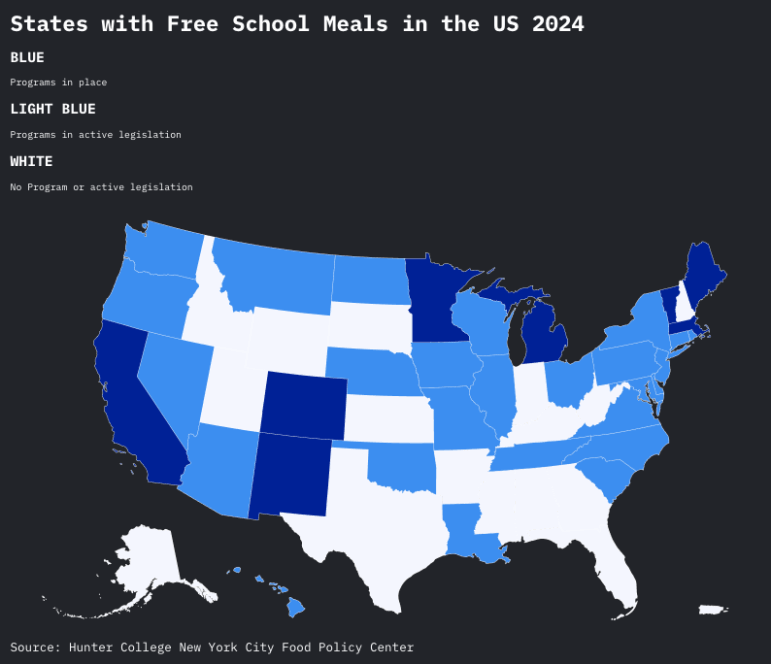
Graphic by Jacob Maurer
Delivering high-quality, healthy food depends heavily on the resources available. Equipping every school in the state with proper food preparation equipment could cost up to $220 billion over the next decade, Rep. Regina Weiss said. This has limited the types of meals schools are able to provide to students.
“A lot of districts went away with having scratch kitchens, a lot now just have heat-and-serve, so it’s difficult for a lot to prepare meals,” Weiss said. “When we first implemented universal meals, one of the concerns I had about it was the health and quality of the meals and dietary restrictions.”
Processed and packaged foods, mainly served in school breakfasts, are the greatest concern when it comes to nutrition, said Dr. Katherine Alaimo, associate professor in the Department of Food Science and Human Nutrition at Michigan State University. Her research focuses on food insecurity and school nutrition.
“You have these foods that are, like, high in white flour, sugar and processed oils with no nutrition in them,” Alaimo said. “That’s kind of the foundation of the poor nutrition that we see in the country, because of these processed foods that don’t have any nutrition.” School lunches offer more nutritional value with heat-and-serve-style meals, Alaimo said, even though they are typically frozen foods. These meals have more stringent requirements than packaged foods offered in school breakfasts.
The U.S. Department of Agriculture requires specific portions of fruit, vegetables, starches, grains, meat, and milk by school grade level that schools must provide each day.
“What the kids are getting often is a little bit more nutritious than what adults are getting,” Alaimo said.
Despite having food options that meet the requirements, Alaimo said she believes schools could go a few steps further.
Alaimo said where her son went to school in Italy, home-style meals were served at no extra cost.
“In both of the schools that my son attended, it was restaurant-quality, scratch cooking every single day … it was exactly what people were serving in their homes, and exactly what you would see in the restaurants in the region,” Alaimo said. “So it’s possible, but it takes a lot more money than the U.S. seems to have been willing to put in for the kids, which is really, really unfortunate.”
Lauren Wietzke, school nutrition specialist at Charlotte Public Schools, said that Charlotte has already started serving healthier options to students.
“We recently started serving plant-based pasta, which is actually delicious, and it comes from a chickpea protein, so we are exposing students to more of those plant-based options if they want that,” Wietzke said.
Wietzke said even though Charlotte still uses shelf-stable packaged items, they rely more on fresh produce. She said Charlotte has even done taste tests with students to allow more exposure to exotic fruits and healthy snack options.
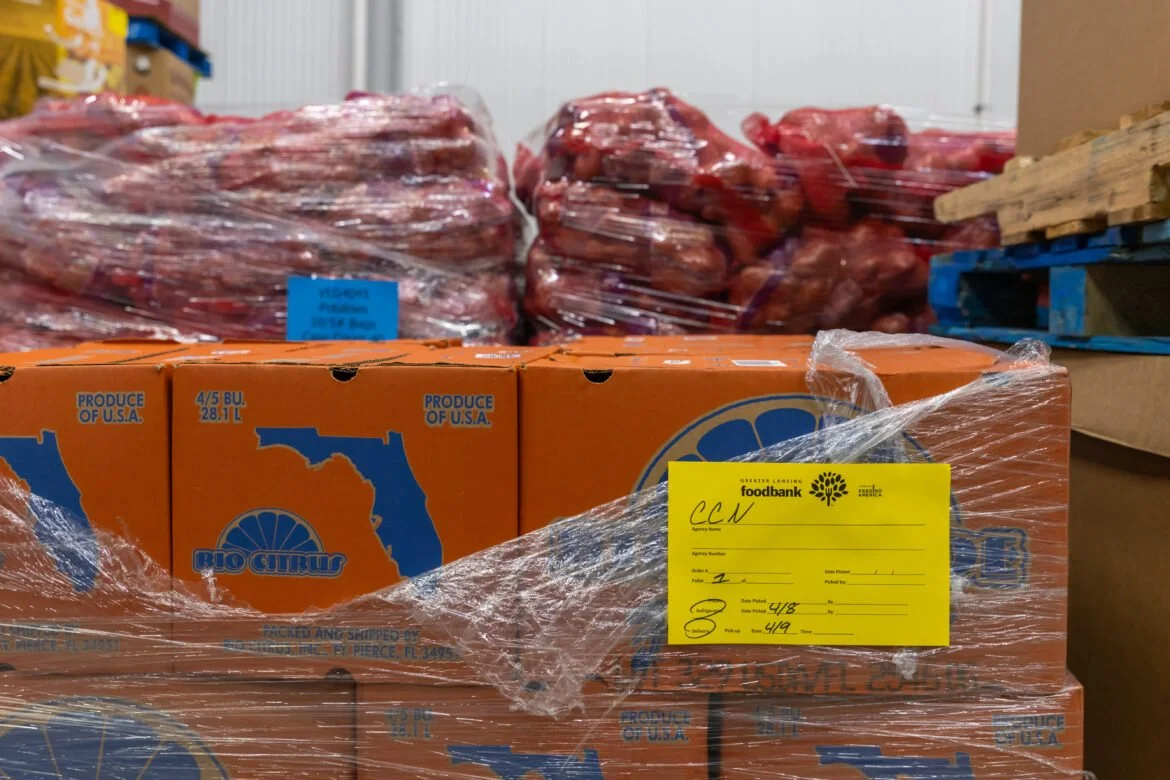
Fresh citrus awaits to be distributed at the Greater Lansing Food Bank (GLFB) in Lansing, Mich., on April 8, 2025. A variety of foods are offered at the GLFB including shelf stable items, fruits, vegetables, and more. Photo by Gavin Hutchings
Wietzke said other food service professionals in the state have been creating more innovative programs. Battle Creek and Detroit Public Schools Community District have new recipes that are simple to make in a scratch kitchen, and can be prepared in large quantities. She also said Grand Rapids has a central kitchen and sends meals to schools in the area.
“There’s a lot that schools can do if they want to take it on,” Wietzke said. “It’s really about the commitment to the food service that the food service professionals have, and also the commitment that the school has to ensure that the budget is there.”
Educators are seeing the difference when these goals are met. When students are fed consistently and nutritiously, it shows up in the classroom.
Dr. Amy Parks, a professor at Michigan State University in the College of Education, said that students are more attentive when they have access to meals.
“If kids are hungry, they can’t learn. But if kids are hungry, kids are hungry,” Parks said.
“We can’t have that in the U.S., we have too much abundance for that.”
