
Rewriting the Narrative: Tiffany Williams Approaches Environmental Justice Through a Sociological Lens
The rapidly declining state of the environment and increasing social inequalities of today have opened the doors for a more holistic understanding of how these issues intertwine. The environmental justice field is evaluating these inseparable events for a more equitable and sustainable future.
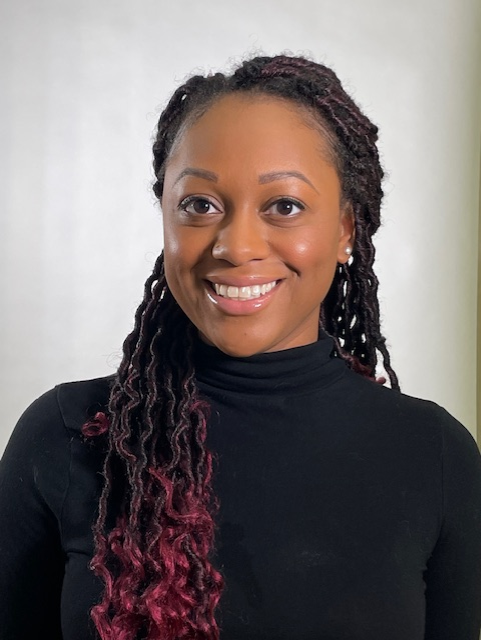
At the forefront of this movement are passionate individuals like Tiffany Williams, a dual sociology and environmental science and policy PhD student at MSU. Her unwavering commitment to environmental justice is rewriting the narrative necessary for change.
As a black woman, she was always keenly aware of issues of inequality, Williams said. Her academic interests focus on extracting the silent truths about marginalized communities through collaboration with community members.
Williams is also a teaching assistant for People and the Environment. She has had an impact on students by offering new perspectives on how power structures underlie environmental issues.
“Tiffany presented questions to the class that really gave me food for thought,” junior Aaliyah Winston said. “I would consider her a key influence in my ability to step back and look at societal systems in their entirety to understand the impacts on the environment.”
Winston said she felt more represented than she thought she would this school year by having Williams as a teaching assistant in class.
Williams navigates the complex intersections of race, religion, and the environment in her research. With a perceptive sociological lens, she delves into projects asking the critical yet historically overlooked questions that highlight the undeniable connection that government power has on environmental and societal breakdown.
When she first embarked on her higher education journey, Williams focused her undergraduate studies on environmental policy and management.
“I was really interested in issues of climate change and conservation and sustainability,” Williams said. “Then I started to learn more about how inequality manifests in the environment.”
For her master’s thesis, Williams explored the discourse that black people have less environmental concern. She looked at data from the General Social Survey to distinguish how race and religion factor into the equation.
“Specifically in the black community, the majority identify as Christian,” Williams said. “So they’re more Christian or more religious than the overall US population.”
Her research revealed that a religious black person tends to lean to the political left and a religious white person tends to lean to the political right. This led her to further question the existing narrative that black people lack environmental concern.
“The issue is that the ways it's being measured or the questions that are being asked are problematic,” Williams said. A random endangered lizard is not going to be a top priority like the water, soil, or air in their backyard that has been polluted by toxic waste facilities.
Currently, Williams is a part of the Community Engagement Core in Saginaw through the MSU Superfund Program. She was invited onto the project this fall by Dr. Joseph Hamm, the environmental graduate program director and an associate professor in criminology. After learning about her research interests, Dr. Hamm said the opportunity seemed like a strong fit.
The project contributes to an ongoing engagement between the Michigan Department of Health and Human Services and communities impacted by contaminants in Saginaw.
“Our argument about how to do that better is to pay attention to and collect those community vulnerabilities,” Dr. Hamm said. “What we're doing is moderating, stepping into an existing relationship.”
Williams’ work focuses on the differences in concern about contamination in black and white communities and how that shapes their trust in public governance.
“If you've been let down by the government in some way, you may not trust what they're saying,” Williams said. “They don't always tell the truth.”
A part of Williams research is evaluating how religion moderates people’s trust in how they will be affected.
“That, I think, couples really well with Tiffany's interest in thinking about community vulnerabilities,” Dr. Hamm said. “She's had a lot of interest in unpacking how communities think about their potential for harm.”
Williams said she envisions a career in academia where she has the flexibility to do the kind of research that speaks to her. This would help strengthen her influence on policy.
“I want to solve all aspects of the problem,” Williams said. She reminds herself to start with small impactful changes and go from there.
