
Climate and Class on Campus

Damon Miller empties water that flooded his basement from a shop vac on Monday, January 29.
The high-pitched buzz of a single shop vac pierces the silence of the 24-person cooperative living house on M.A.C. Avenue. Residents discovered their basement had flooded with city sewer water on Sunday, Jan. 28.
As individual homeowners splitting shares of the house, the contract does not protect these MSU students from maintenance issues. Their house is part of the Spartan Housing Cooperative or SHC, which acts more as insurance than a governing body for the 18 houses it looks after. “If this were a landlord, we would basically be able to sue for unsafe living conditions, but this is our own house so we can’t do anything,” says House Facilities Officer Gabrielle Ahlborn.
Instead of going to class or work, these students are staying home to clean up the mess. “I’m taking 19 credits and I work two jobs,” Ahlborn said. “Some people had to skip class just so there was enough people here to clean up the water without it like really damaging any of our major appliances.”
Senior Julia Bissonette says she has taken on extra expenses buying takeout meals when the refrigerator stopped working.
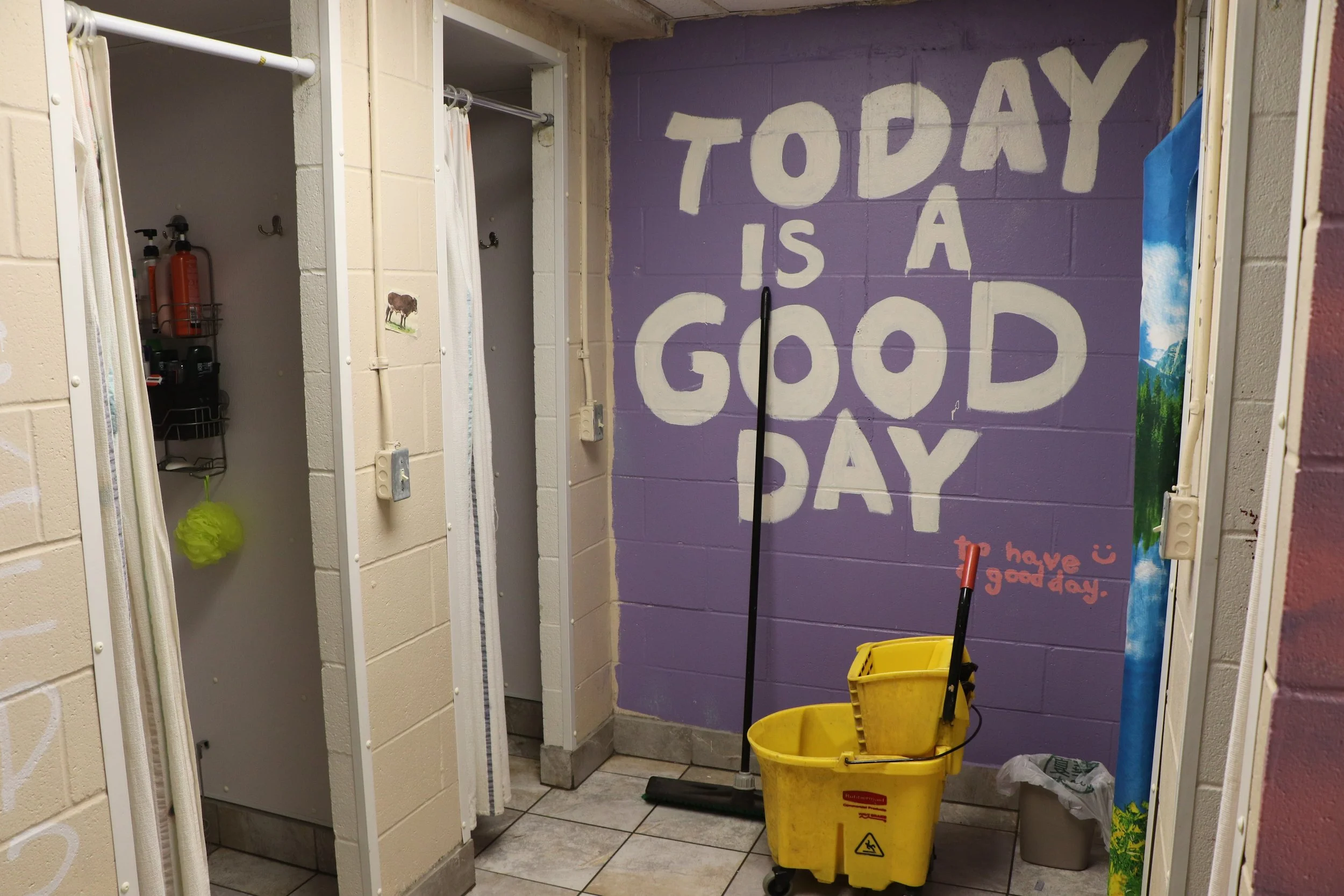
A mop bucket sits in the shower room in the basement.
Residents are resorting to showering at the gym after their showers in the basement were also submerged in water. Damage to laundry machines means they are also relying on the laundry facilities of other houses in the cooperative.
Others have paid to use a laundromat. Those without a car have incurred further expenses paying for Ubers. “We’re dirt bagging it straight up,” said Ahlborn.
“We’re flooding, there’s mold growing, there’s so many basic health issues that aren’t being addressed,” Ahlborn said. “We’re getting little support from the SHC. They also have no tradespeople.”
The SHC website says, “residents own and maintain their own houses.” They have a right “to live in a room and House which are clean sanitary, and in good repair” and a responsibility “to communicate with the House and SHC when such work is needed.”
Ahlborn said their rent is rising but their house is not seeing the benefit. When residents reported the flooding basement, the cooperative suggested they mop and throw the water outside.
“This has happened before, normally when East Lansing gets heavy rain storms we know it’s coming and it comes in through our side door but now that the sewage system’s overloading it’s coming up through our drains and that’s like a health hazard as well,” Ahlborn said.
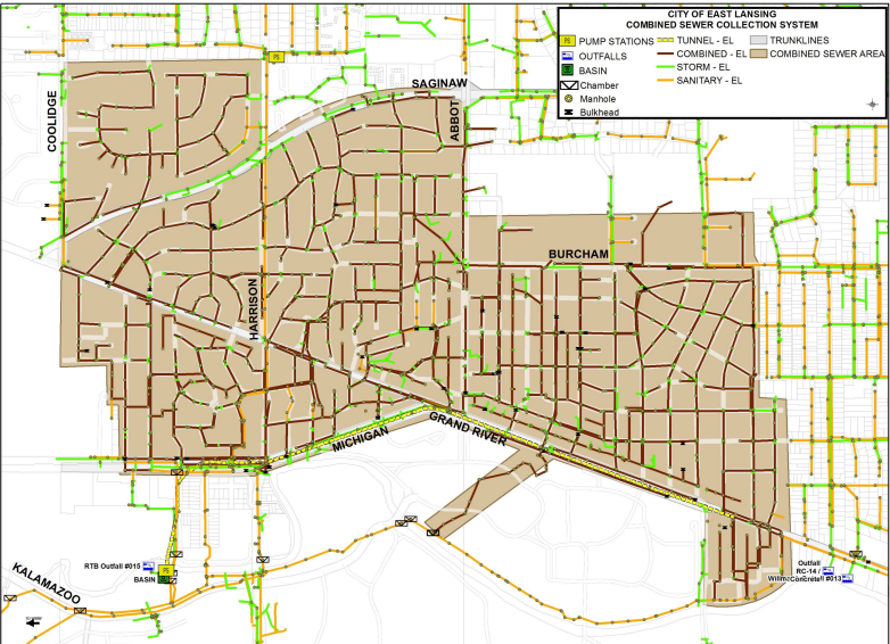
Map of the combined sewer system from the City of East Lansing Website. It estimates the M.A.C. Avenue sewer system is 80-100 years old.
East Lansing has a combined sewer system, which “combines both surface runoff (stormwater) with wastewater (sewage) and leads to a treatment plant for processing,” according to the Greater Lansing Regional Committee for Stormwater Management.
The website also says, “In rare cases, extreme rain events and/or blockages can cause combined sewers to back up through a home basement drain.
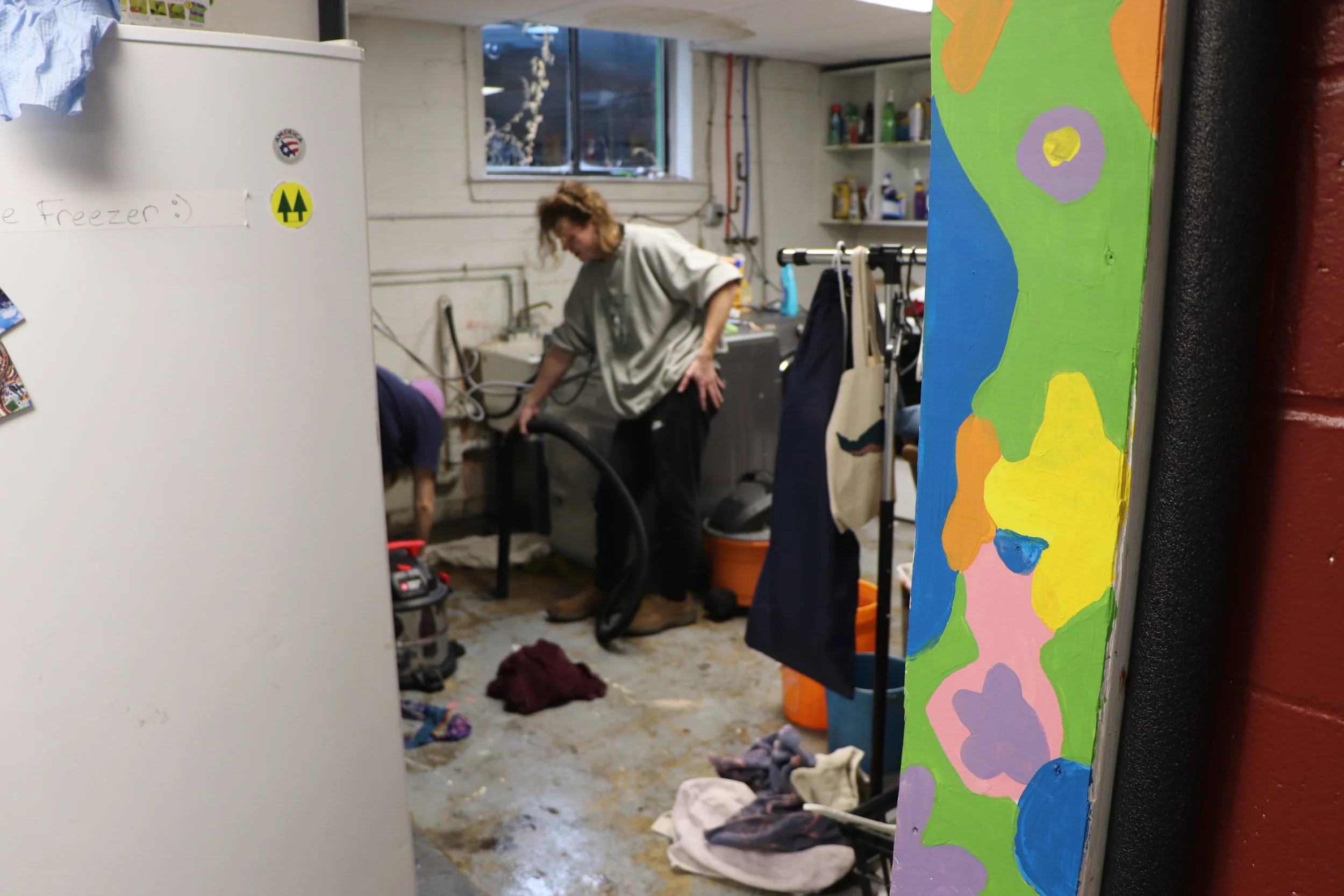
Miller vacuums water flooding out of the drain in his basement on Monday, January 29.
Flooding during the winter is becoming a trend for the entire state, according to state climatologist Dr. Jeffrey Andresen.
“Michigan’s getting warmer and it’s getting wetter,” said Dr. Andresen. “At night our minimum temperatures are increasing our warming more rapidly than the daytime max temperatures.”
The air in the atmosphere can hold more water vapor at higher temperatures, creating the conditions possible for increased precipitation, he said.
Michigan now has an average of 10-15% more precipitation on an annual basis compared to 50 years ago.
“That equates to the increase of about 3 or 4 inches extra on average,” Dr. Andresen said. “Now we have almost an extra month’s worth of precipitation each year on average.”
These precipitation events are increasing by two factors. More days of precipitation mean these events are more frequent and more precipitation per event make them more severe.
“We’re seeing our seasonal warmup in the spring occur now earlier on average than it did in the past,” Dr. Andresen said. “The other issues with those winter floods, sometimes we have frozen soils, and frozen soils don’t allow water to sink in.”
The climate has changed greatly over geologic timeframes and there is natural cycling of climate. However, the scale of change has increased with the increased scale of production.
“We are seeing changes that are unquestionably linked with human activity,” says Dr. Andresen. “You just have to look at the evidence and the data. It’s irrefutable and it should be of concern to everyone.”
The MSU students in the SHC are experiencing these effects firsthand.
“If something is done, or changes are made, it still suggests that we have the ability to at least limit the severity and the timing of some of the negative aspects of changing climate,” Dr. Andresen said.
